Contents
Colour is one of the most misrepresented aspects of French Bulldog buying in the UK. The language used to sell them, “rare”, “exotic”, “exclusive”, is designed to create the impression that an unusual coat colour is an indicator of quality or value. It is not. In a number of cases, it is an indicator of the opposite.
This guide explains the recognised colour standards for French Bulldogs, what the Kennel Club says about unacceptable colours, and the specific health implications associated with blue, merle and other popular variations. It is meant to give buyers the information they need before they commit to what can be a very expensive purchase.
The Kennel Club Breed Standard
The Kennel Club breed standard for French Bulldogs describes the acceptable colours as:
- Brindle: a base colour of fawn with darker stripes running through it, ranging from light tiger brindle to a very heavily dark brindle where the base fawn is almost invisible
- Fawn: a warm tan colour ranging from pale cream-fawn to a rich golden fawn
- Pied: a white base coat with patches of brindle or fawn. The patches should be clearly defined
- Cream: a pale, warm off-white
- White: accepted, though may carry a higher risk of hereditary deafness in some individuals
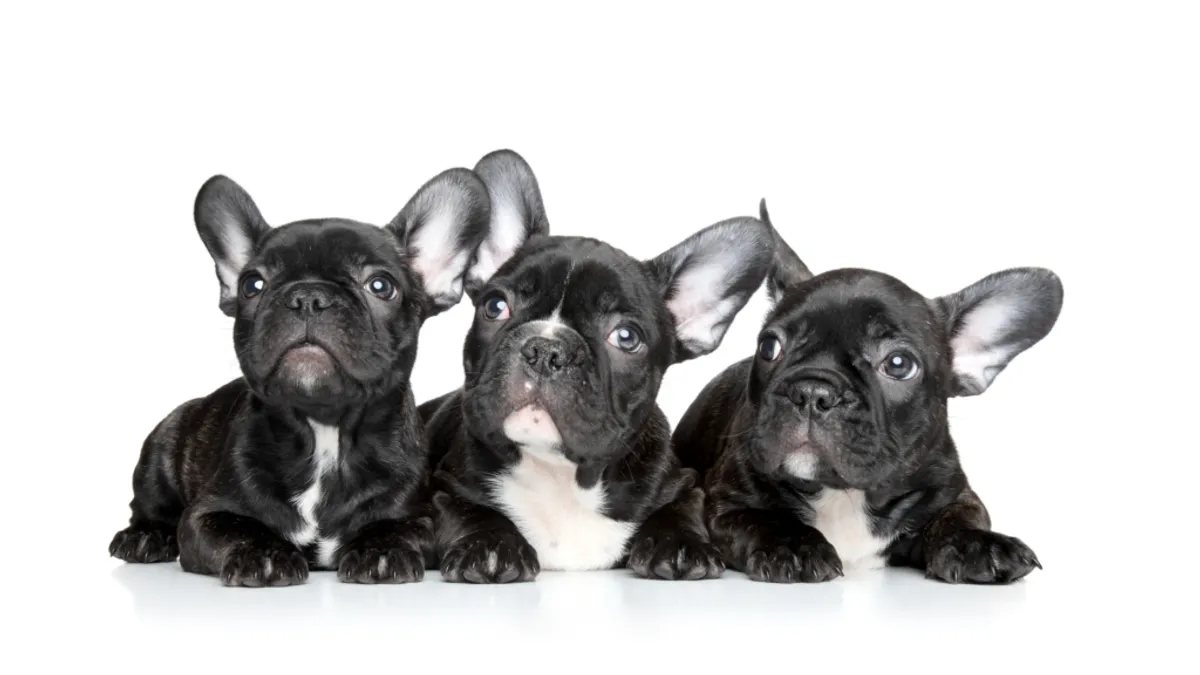
Solid black (no trace of brindle in the coat) is listed as an unacceptable colour. This means that at a show, a judge may withhold awards from a dog of that colour, though the dog can still be registered.
The standard also lists various colour combinations that are explicitly unacceptable, including black and white without brindle, black and tan, liver (chocolate), mouse (blue-grey) and any colour with tan points.
Recognised Colours in Detail
Brindle
Brindle is the most classic Frenchie colour and one of the most handsome. The pattern is caused by the K locus gene (dominant black) and the A locus gene interacting to produce the distinctive striped effect on a fawn base.
The range within brindle is substantial. A lightly brindle dog is mostly fawn with visible darker stripes. A very dark brindle appears almost black, with the fawn base only visible in certain light. Both are fully accepted under the breed standard.
Fawn
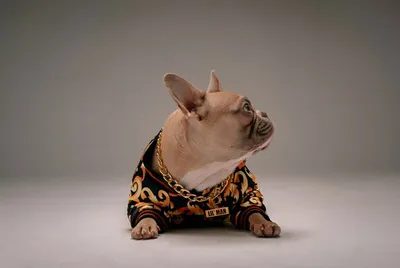
Fawn runs from the very palest creamy fawn to a rich, warm red-fawn. The French Bulldog Lyla photographed throughout this site is a red fawn, which gives some sense of the warmer end of the colour range.
A fawn French Bulldog may have a black or dark mask on the face (black-masked fawn) or no mask. Both are acceptable.
Pied
Pied dogs have a predominantly white coat with patches of brindle or fawn. The patches tend to appear on the head, back and flanks. The distribution and size of patches varies significantly between individuals; no two pied Frenchies look quite alike.
Pied dogs with only tiny patches, or patches that are almost entirely on the head, are sometimes called “heavily pied” or “extreme pied”. Very extensively white piebalds may carry a higher risk of hereditary deafness associated with the absence of pigment in the inner ear.
The Unrecognised Colours: What You Need to Know
The following colours are not recognised by the Kennel Club breed standard and are associated with varying levels of concern.
Blue (dilute)
Blue French Bulldogs have a grey-blue coat caused by the dilute gene (the dd genotype at the D locus). Both parents must carry a copy of the dilute gene for a puppy to be blue.
The dilute gene is associated with Colour Dilution Alopecia (CDA), a condition in which the abnormally formed pigment granules in the hair follicles cause the follicles to rupture over time. The result is patchy hair loss and a chronic skin condition with a predisposition to bacterial infection.
CDA does not affect every blue dog. Some blue Frenchies have no skin problems at all. But the elevated risk is real and documented in veterinary dermatology literature. Dogs that do develop CDA require ongoing veterinary management, adding to the lifetime cost in exactly the same way as the breed’s other health vulnerabilities.
The blue colour premium (often an extra £500 to £1,500 on top of a standard price) is not justified by any additional health quality. It reflects the buying behaviour of people who find the colour appealing.
Chocolate (liver)
Chocolate French Bulldogs carry two copies of the b allele at the B locus, which reduces the black pigment eumelanin to a brown. The result is a warm brown coat, a brown nose, brown eye rims and often lighter eyes.
Like blue, chocolate does not carry the same severe direct health risks as merle. The main concern is the breeding context: chocolate is sometimes produced through breeding programmes that prioritise colour over BOAS grading, health testing and structural soundness.
Lilac
Lilac (also called Isabella) is the result of a dog carrying both the dilute gene and the chocolate gene: dd and bb together. The coat appears a pale, muted grey-taupe. Lilac is one of the most heavily marketed “rare” colours and commands some of the highest price premiums.
Because lilac combines two dilution factors, the potential for CDA-associated skin issues is at least as significant as for blue. Lilac French Bulldogs are often sold for £4,000 to £8,000 or more. There is no health or welfare justification for this price.
Tan points
Tan-pointed French Bulldogs have a pattern borrowed from breeds like Rottweilers and Dobermanns: a dark body with tan (fawn) markings above the eyes, on the muzzle, chest, legs and beneath the tail. This is caused by the at allele at the A locus.
The pattern is not inherently associated with the same health risks as dilution genes, but it is not a recognised French Bulldog colour and signals breeding that has prioritised marketable novelty over conformance to breed health standards.
Merle
Merle is the most serious concern in this list, and the one that attracts the most justifiably strong positions from welfare organisations.
Merle is a pattern, not a colour: it creates a mottled, marbled coat in which patches of diluted colour alternate with full-colour areas. In breeds where merle naturally occurs (Collies, Dachshunds, Great Danes), the pattern has been part of the breed standard for generations.
French Bulldogs do not have merle in their natural gene pool. The pattern has been introduced via crossbreeding, which is contrary to the integrity of the breed, and has been selectively retained because the resulting appearance commands extraordinary prices.
Why merle is a welfare concern
The merle gene (M locus) comes in two forms: heterozygous merle (one copy, Mm) and homozygous merle (two copies, MM), also called double merle.
Single merle dogs have an elevated risk of hearing and vision problems compared to non-merle dogs. The risk varies by the individual dog and the extent of white or dilute areas, but it is not negligible.
Double merle dogs have very high rates of serious defects. When two merle dogs are bred together, a proportion of the offspring will be double merle. These dogs experience rates of deafness, partial or complete blindness, microphthalmia (abnormally small eyes), missing eyes and abnormal eye development that are far above the general population. In some studies, the majority of double merle dogs have significant sensory impairment.
Producing double merle puppies knowingly, for the purpose of selling them at a premium, represents a serious animal welfare failure. The Kennel Club and the BVA have both taken positions against merle breeding in French Bulldogs for this reason.
The French Bulldog merle you see advertised at £5,000, £7,000 or more is the product of a breeding practice condemned by the organisations responsible for breed health in the UK. The price premium is entirely a function of the striking appearance and the marketing language around “exotic” colouring, not any indicator of quality.
Fluffy (long-coated)
The fluffy or long-coated French Bulldog carries two copies of the LH (long hair) gene, producing a noticeably longer, silkier coat than the standard. The gene appears to have been present in the French Bulldog gene pool at low frequency for many decades, surfacing occasionally as what breeders historically called a “fault”.
The resurgence of fluffy Frenchies as a premium product is a recent phenomenon, and the dogs are sold at significant price premiums, sometimes exceeding £5,000.
The long coat itself does not carry the direct health implications of dilute genes or merle. However:
- Fluffy Frenchies are not registerable as show dogs with the Kennel Club
- The breeding of fluffy Frenchies, when prioritised as a commercial product, tends to occur without the BOAS testing and health-focused breeding that responsible breeders prioritise
- Some fluffy breeders combine the long-coat gene with other unrecognised colours (fluffy blue, fluffy merle), compounding the potential health concerns
Why “Rare” Is a Marketing Word
Every colour listed in the unrecognised section above is produced by specific genetic combinations that can be reliably replicated by breeders who prioritise them. None of them are genuinely rare in the sense of being difficult to produce. The word “rare” in this context means “not recognised by the breed standard” and “commands a premium from buyers who find it appealing”.
A dog advertised as rare, exotic or exclusive is, in a reputable breeding context, being honest: it is a colour outside the standard, and the premium reflects buyer demand rather than any additional quality, care or investment by the breeder.
The Kennel Club and Unrecognised Colours
The Kennel Club can and does register dogs of unacceptable colours; registration records parentage rather than conformation to the breed standard. An unrecognised-colour Frenchie being KC-registered does not mean the colour is accepted.
The KC has taken increasingly firm positions on breeding practices associated with unrecognised colours, and has moved to restrict the registration of litters produced from certain pairings (including merle to merle) as part of its efforts to protect breed health.
The Assured Breeder Scheme (ABS) does not preclude breeders from producing unrecognised-colour dogs entirely, but the health testing requirements that ABS members must meet provide at least a baseline of health consideration. A breeder producing blue or chocolate dogs who also BOAS grades and DNA tests their breeding stock is better than one who does neither. The ideal is standard colours from fully health-tested parents.
Practical Guidance for Buyers
If you are looking for a French Bulldog puppy and are drawn to a non-standard colour, consider the following:
- Blue, lilac and other dilute-gene dogs carry CDA risk. Factor that into the lifetime cost calculation and the insurance conversation.
- Merle carries welfare concerns that go beyond the individual dog in front of you: the breeding practices that produce them are harmful in aggregate.
- A colour premium does not reflect breeder quality. The most important investments a breeder makes are in health testing, selecting appropriate pairs and socialising puppies well. None of these are captured in a coat colour.
- A standard-colour Frenchie from health-tested parents is the best value purchase, whether measured by lifetime health costs, the likelihood of a well-socialised puppy, or alignment with the breed’s long-term welfare.
For a full breakdown of the health conditions relevant to French Bulldogs and what responsible health testing looks like, see our French Bulldog health guide. For everything about finding a responsible breeder and what to ask, see our responsible buying guide.
For a broader overview of all French Bulldog coat colours, the genetics behind them and how colour interacts with KC registration and the non-standard breeding market, the French Bulldog colours hub is the entry point for this whole topic.
Specific merle colour guides: blue merle, lilac merle, black merle, fawn merle, are merle Frenchies purebred? and merle French Bulldog prices. For the specific health conditions associated with the merle gene, hearing deficits, ocular abnormalities and the double merle risks, the merle French Bulldog health issues guide covers the genetics, the risks and what responsible breeding should involve.
Detailed guides to the individual non-merle colour variants: blue French Bulldog, lilac French Bulldog, black and tan French Bulldog, brindle French Bulldog and cream French Bulldog. Further guides cover the KC-standard colours, sable, fawn and pied, and the non-standard variants with their specific health and breeding considerations: chocolate, isabella, platinum and fluffy French Bulldogs.
French Bulldog Colours: Registration and Health Status
Based on Kennel Club Breed Standard (2024) and BVA colour genetics guidance
The most common KC standard colour. Ranges from cream to deep red fawn.
Dark stripes over fawn base. Standard KC colour with no associated health risks.
White with fawn or brindle patches. Standard KC colour.
Pale fawn to off-white. Standard KC colour. Hereditary cataracts screening important.
Carries the dilute gene (dd). Associated with Colour Dilution Alopecia (CDA). Not KC registered.
Recessive b/b gene. Not KC registered. No specific additional health risks beyond breed standard.
Foreign gene in the breed (not natural to French Bulldogs). Double merle causes blindness and deafness. Avoid entirely.
Long coat from the FGF5 gene. Not a standard KC variety. No additional health risks from coat alone.
Frequently asked questions
-
The Kennel Club breed standard accepts brindle, fawn, pied (white with patches of brindle or fawn), cream and white. Solid black (without any trace of brindle) is not acceptable under the standard. Colours that are not acceptable include blue, chocolate, lilac, tan-pointed, merle and fluffy (long-coated). These are either produced by dilution genes, recessive coat genes or patterns that introduce serious health risks.
-
Blue Frenchies carry a dilute gene (dd) that causes their coat to appear grey-blue. This dilution is associated with Colour Dilution Alopecia (CDA), a condition that causes patchy hair loss, dry skin and recurring skin infections in some affected dogs. Not every blue Frenchie develops CDA, but the risk is significantly elevated compared to dogs without the dilute gene. Blue is not a Kennel Club recognised colour.
-
Merle French Bulldogs are sold at very high prices because buyers pay them, driven by the striking appearance of the merle coat pattern. The price reflects market demand, not additional quality or ethical breeding. Merle is not a natural pattern in the French Bulldog gene pool and has been introduced through crossbreeding. Single merle dogs have elevated health risks; double merle dogs (bred from two merle parents) have very high rates of deafness, blindness and other serious conditions.
-
A fluffy (or long-coated) French Bulldog carries two copies of the LH (long hair) gene, producing a noticeably longer, softer coat than the standard short-coated Frenchie. The gene has been present in the breed for some time, though KC registration is not accepted for the long-coated variety. Fluffy Frenchies are sold at significant price premiums. The coat itself does not carry the same direct health implications as blue or merle, though the breeding context matters considerably.
-
The Kennel Club will register dogs of unacceptable colours, as registration is based on parentage rather than conformation. However, these dogs are registered under a restricted status, they cannot be shown, and responsible breeders regard unacceptable colour breeding as contrary to the health and welfare of the breed. A dog being Kennel Club registered does not indicate that its colour is breed-standard.
-
No. The colour premium paid for blue, chocolate, lilac, merle or fluffy Frenchies reflects demand and branding, not any additional care, testing or quality in the breeding programme. In many cases, breeders charging colour premiums are prioritising marketable traits over health testing. Some unrecognised colours carry genuine health risks. A responsibly bred standard-colour Frenchie from health-tested parents is a significantly better purchase than an expensive 'rare' colour dog from untested parents.