Contents
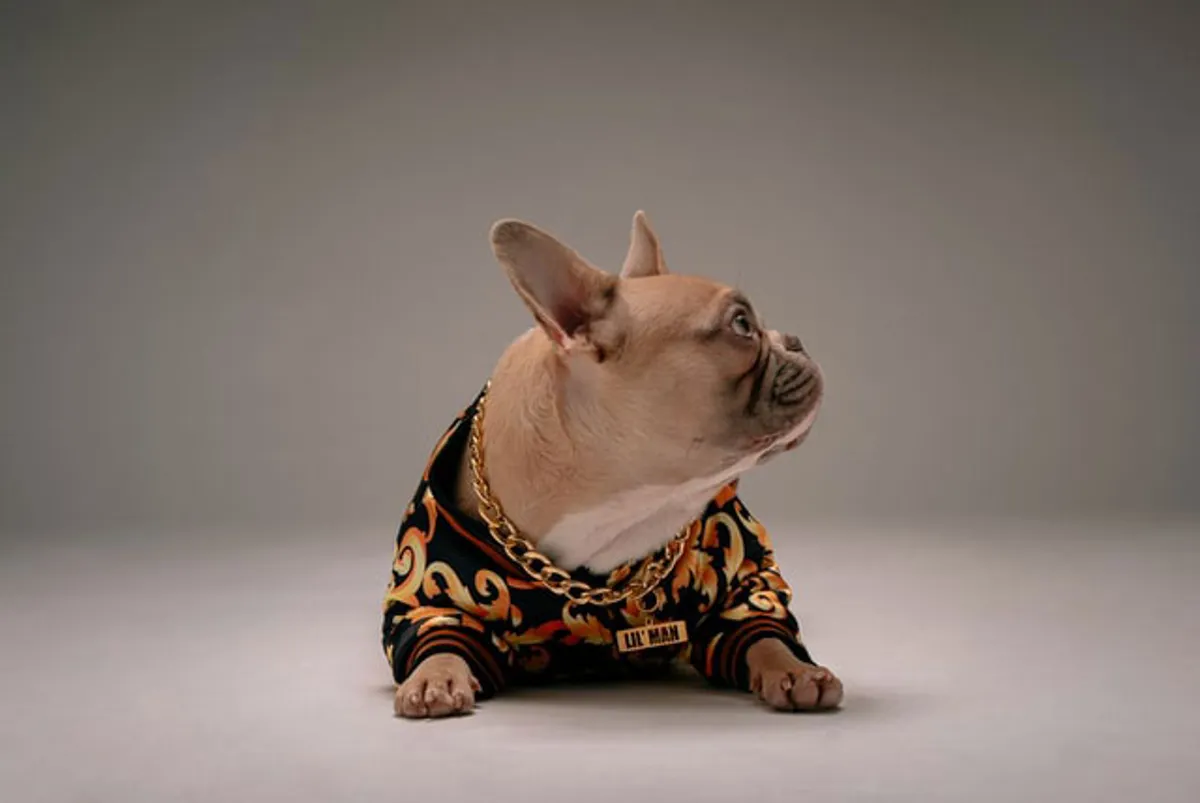
Platinum French Bulldogs occupy a specific position in the non-standard colour market: they are pale, striking dogs whose appearance commands significant price premiums, while carrying health considerations from the dilution gene and typically being produced outside the KC health-tested framework. Understanding exactly what platinum means genetically, how it relates to other pale and dilute colours, and what the welfare implications are matters for anyone considering one.
What platinum actually is
“Platinum” is not a formal genetic designation but a market term describing a French Bulldog that combines two specific genetic traits:
-
e/e (recessive red / cream expression): The dog is homozygous for the recessive e allele at the Extension locus. This effectively switches off eumelanin (dark pigment) production in the coat, leaving only phaeomelanin expression. At low intensities, this produces a pale cream or near-white coat.
-
d/d (blue dilution): The dog is homozygous for the dilution allele at the D locus. This affects the intensity of both eumelanin and phaeomelanin, reducing pigment density in each hair shaft.
The combined effect of e/e (removing dark pigment) and d/d (diluting remaining pigment) produces an extremely pale, almost white coat. What distinguishes a platinum from a standard cream is primarily the nose: a standard cream (e/e only) has a black nose; a platinum (e/e + d/d) has a grey, lilac or faded nose because the black nose pigment is diluted by the d/d genotype.
How to identify a platinum
The most reliable visual indicators of platinum versus standard cream:
- Nose colour: Grey, lilac-toned or faded rather than solid black
- Eye colour: May be grey-blue or lighter hazel rather than dark
- Coat tone: Slightly icy or washed-out, often with no warmth to the cream
DNA testing provides certainty. A platinum dog will test as e/e at the E locus and d/d at the D locus. Reputable DNA testing services provide confirmation for both loci.
The relationship to other dilute colours
Platinum is one of several pale French Bulldog variants that result from dilution genetics. For comparison:
- Lilac (blue/d/d + chocolate/b/b): Produces a warm grey-brown coat, covered in the lilac French Bulldog guide
- Isabella/true lilac: A specific combination of d/d and b/b with additional modifier effects, covered in the isabella French Bulldog guide
- Standard cream (e/e only): No dilution gene; black nose; a fully KC-standard colour
- Platinum (e/e + d/d): Near-white with diluted nose; not KC-standard
The visual similarity between pale platinums, isabellas and very pale creams is one reason DNA testing is the only reliable way to know what you are looking at.
Health considerations
Colour Dilution Alopecia (CDA): The d/d genotype in any French Bulldog, whether blue, platinum, lilac or isabella, carries a risk of CDA. CDA is a follicular dysplasia causing progressive coat thinning and patchy hair loss, typically first appearing from six months to two years of age. Not all d/d dogs develop it, but the risk is present in all dogs carrying the dilution gene.
The non-standard breeding market: Beyond the colour-specific concern, platinum Frenchies are virtually always produced in the non-standard colour market, where BOAS assessment, spinal screening and hereditary cataract testing are inconsistently applied. The welfare risk from absent health testing in the parents is likely more significant than the CDA risk.
Buying considerations
If you are considering a platinum French Bulldog:
- Expect a lower baseline of health documentation than from KC-registered breeders
- Press specifically for BOAS assessment, spinal screening, and hereditary cataract results for both parents
- Request DNA colour testing confirming the platinum genotype
- Ask whether the breeder monitors for CDA and what their approach is to affected puppies
- Do not pay the novelty premium without health documentation to justify it
The buying guide covers the full process and what documentation to request. The French Bulldog colours guide places platinum within the broader colour landscape.
Frequently asked questions
-
A platinum French Bulldog is a dog with an extremely pale, almost white coat produced by the combined effect of the cream gene and the blue dilution gene. A platinum dog is typically genetically both 'e/e' (cream expression at the E locus, which removes dark pigment) and 'd/d' (blue dilution). The result is a very pale, often near-white dog. Platinum is not an official KC colour category and falls outside the breed standard.
-
Standard cream is produced by the e/e genotype at the Extension locus, which prevents dark pigment expression and results in a pale coat. A standard cream dog has a black nose. A platinum dog is e/e AND d/d (carrying the blue dilution gene), which dilutes what little remaining pigmentation there is. Platinum dogs have a greyed or pale lilac-toned nose rather than a solid black one, which is one way to distinguish them from standard cream. The coat may be slightly icier or more washed-out in tone.
-
Platinum Frenchies carry the d/d blue dilution gene, which is associated with Colour Dilution Alopecia (CDA). CDA is a follicular condition causing progressive coat thinning and patchy hair loss, usually appearing from six months to two to three years of age. Not every dog with the d/d genotype develops CDA, but the risk is present. The platinum coat also often appears in the context of the non-standard colour market, where health testing compliance is lower than in KC-registered breeding.
-
Platinum French Bulldogs are marketed as rare and exotic, which drives high price premiums in the non-standard colour market. The rarity is partly genuine, producing platinum requires specific genetics, but the premium is almost entirely based on novelty demand rather than any quality or health advantage. Prices of £3,000 to £8,000 or more are common in UK advertising. These prices reflect market positioning, not health testing standards or breeding quality.
-
Not exactly. Platinum refers specifically to a dog that is e/e (cream) AND d/d (blue dilute). Isabella/true lilac refers to a dog that is b/b (chocolate) AND d/d (blue dilute), producing a warm grey-brown. The two can look visually similar, both are very pale, but the genetic composition and, to a trained eye, the precise tone differs. A platinum dog has a cream-pathway pale coat with a blue-diluted nose; an isabella has a chocolate-diluted base. Overlap in common usage of these terms can cause confusion.