Contents
The blue French Bulldog is one of the most searched-for colour variants of the breed, and it is one of the most commercially exploited. Understanding what produces the blue colour, what health implications come with it, and what the non-standard status means in practice gives buyers the grounding they need to make an informed decision.
What makes a French Bulldog blue
The blue colouration results from the dilution gene, located at the D locus. In dogs, the D locus has two alleles: D (dominant, non-dilute) and d (recessive, dilute). A French Bulldog must carry two copies of the recessive d allele (genotype d/d) to express the blue coat colour.
The dilution gene acts on black pigment (eumelanin). In a dog that would otherwise be black, having d/d dilutes the black to a grey-blue. In a dog that would be black and tan, d/d produces a blue and tan. The dilution does not affect red or yellow pigment (phaeomelanin) in the same way, which is why fawn Frenchies, whose base pigment is phaeomelanin, are not made blue by the same gene.
The shade of blue varies from dog to dog. Some blue Frenchies have a pale, silvery coat; others have a darker, more intense blue-grey. Both come from the same genetic cause.
Accompanying physical changes. The dilution gene affects pigment throughout the body. Blue French Bulldogs characteristically have:
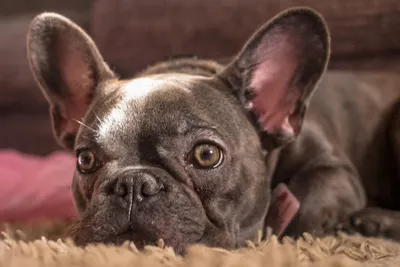
- Grey or blue-grey nose leather rather than solid black
- Lighter eye colour, grey, amber, or pale green rather than dark brown
- Paler toe nails compared to standard-colour dogs
Colour dilution alopecia
Colour dilution alopecia (CDA) is a hereditary skin condition associated with the dilute gene. It occurs because the dilution process affects not just the hair shaft colour but the structure of melanosomes (pigment granules) within the hair. Abnormal melanosomes cluster and rupture, damaging the hair follicle. The result is follicular dysplasia in dilute-coloured areas of the coat.
What CDA looks like:
- Gradual thinning of the coat, typically becoming apparent from six months to three years of age
- Hair loss concentrated in the dilute-coloured areas
- Dry, flaky skin and recurrent bacterial skin infections in thinning areas
- Affected skin becomes increasingly prone to sun damage
Not every blue French Bulldog develops CDA. The condition is variable in severity: some dogs develop only mild, patchy thinning; others develop significant hair loss with persistent skin infections that require ongoing management.
Management, not cure. There is no treatment that reverses CDA. Management focuses on keeping affected skin healthy: gentle bathing with appropriate shampoos, regular moisturisation, sun protection for exposed skin, and prompt treatment of secondary infections when they develop. Dermatology referral is appropriate for dogs with moderate to severe CDA.
The connection between the dilution gene and CDA means that breeding specifically for the blue colour carries an inherent health cost that is not present in standard-colour French Bulldogs. This is the core ethical concern with breeding blue dogs.
KC registration and breed standards
The Kennel Club breed standard for the French Bulldog specifies permitted colours: brindle, fawn, pied and their combinations. Blue is not among them. The standard notes that “other colours exist but are not acceptable.”
This does not prevent blue Frenchies from being KC registered if their parents were registered, KC registration is primarily a pedigree record. However:
- KC Assured Breeders are not permitted to breed for non-standard colours. A blue Frenchie from an Assured Breeder would be unusual.
- Blue Frenchies cannot be shown at KC-licensed shows. The non-standard colour would result in disqualification.
- The KC has specifically stated concerns about breeding for extreme or non-standard traits in brachycephalic breeds, citing the health implications.
The non-standard status does not itself mean a blue Frenchie was bred irresponsibly, it means the breeding does not conform to KC standards and that greater scrutiny of the breeder is warranted. Health testing records, BOAS grading of parents, and transparent genetic testing matter for any French Bulldog; they matter particularly for non-standard colour breeding where other shortcuts may also have been taken.
What to look for when buying a blue French Bulldog
If you have decided a blue Frenchie is the right choice, apply the same standards as for any French Bulldog, with additional questions specific to the colour:
Parent health testing. Both parents should be BOAS graded (Grade 0 or 1 for breeding). Both should have eye certificates, DNA tests for hereditary cataracts, L-2-HGA and degenerative myelopathy. These apply to all French Bulldogs.
Dilution gene awareness. Ask whether the breeder screens for CDA or discusses the condition openly. A responsible breeder breeding blue dogs knows CDA, can describe its presentation, and can tell you their strategy for managing the risk in their lines.
Genetic testing. Responsible breeders producing colour genetics they advertise should be able to provide DNA colour panel results for the parents to confirm what they say the parent carries.
Environment and socialisation. Puppies should be raised in the home, well-socialised, and visibly comfortable with handling. This applies to all French Bulldogs regardless of colour.
The full guide to responsible buying, including the health certificates to ask for and the red flags to watch for, is in the buying guide. For the broader picture of how all French Bulldog colours are produced, the colours overview gives the genetic framework.
Blue French Bulldogs and the health picture
A blue Frenchie carries the same health challenges as any French Bulldog, BOAS risk, spinal concerns, skin fold issues, ear infections, plus the additional CDA risk specific to the dilution gene. This stacking of health considerations is relevant when calculating lifetime veterinary costs and choosing appropriate insurance.
Pet insurance providers vary in how they treat colour dilution alopecia: some cover it under general skin conditions; others may attempt to exclude it as a “congenital” or “hereditary” condition. Reading the policy terms carefully and asking the insurer directly about CDA coverage before purchase is important for blue dog owners specifically. The insurance guide covers what to look for in a policy for this breed.
Blue Frenchies are commonly bred alongside other dilute or rare colours. The lilac French Bulldog guide covers the double-dilution combination that builds on the blue gene, and the black and tan French Bulldog guide covers the tan point pattern which is frequently combined with dilute base colours.
Frequently asked questions
-
Blue in French Bulldogs is caused by the dilution gene (d/d). Two copies of the recessive dilute allele are required to produce the blue phenotype. The dilution gene dilutes the black pigment (eumelanin) in the coat, producing a grey-blue colour that ranges from pale silvery grey to a deeper steel blue depending on the dog. The same gene affects the nose leather and eye colour, blue Frenchies typically have lighter grey or blue-grey noses and often have lighter-than-standard eye colour.
-
Yes. Colour dilution alopecia (CDA) is a skin and coat condition associated with the dilution gene, affecting a meaningful proportion of dogs that carry two copies of the dilute allele. CDA causes patchy hair thinning, dry and flaky skin, and recurrent skin infections in affected areas. Not all blue Frenchies develop CDA, but the risk is significantly higher than in standard-colour dogs. The condition is manageable but not curable, and affected dogs require ongoing skin care and sometimes veterinary treatment.
-
Blue is not a recognised colour in the Kennel Club breed standard for the French Bulldog. KC registration records parentage and health testing rather than certifying colour conformity, so blue Frenchies can technically have a KC registration if the parents are registered. However, KC Assured Breeders are not permitted to breed for non-standard colours, meaning blue Frenchies from KC Assured Breeders are rare. The colour being non-standard does not necessarily indicate poor breeding, but it does mean the dog cannot be shown and that the breeding origin deserves more scrutiny.
-
Blue French Bulldogs typically command a premium over standard-colour Frenchies in the UK, commonly between £3,000 and £5,000, with some breeders asking considerably more. The premium reflects demand rather than any health benefit, blue Frenchies carry higher health risks than standard-colour dogs, not lower. The price premium for the colour does not translate into a more robust or valuable dog.
-
Blue and tan French Bulldogs have the dilute blue base colour combined with tan points, lighter markings above the eyes, on the cheeks, chest and legs in a classic tan point pattern. This requires the dog to carry both the dilution gene (d/d) and the tan point gene (at/at). The tan point pattern is not a recognised Kennel Club colour in French Bulldogs.
-
Yes. Blue is the breeder and colloquial term for what is genetically and visually a diluted grey coat. The range of shades produced by the dilution gene in dogs varies from a pale silvery grey to a deeper blue-grey, and different dogs within the blue category look noticeably different from one another. Some breeders use 'blue' and 'grey' interchangeably; others use 'blue' for deeper shades and 'grey' for paler ones. Genetically, they are all the same: two copies of the d allele.