Contents
French Bulldogs and Boston Terriers are routinely compared because they fill a similar role: compact, brachycephalic companion dogs suited to urban living. They look superficially similar in photographs, share some health risks and attract similar types of owner. The differences, in temperament, trainability, health profile and cost, are real and meaningful for anyone choosing between them.
Origins and background
The Boston Terrier is an American breed, developed in Boston in the late nineteenth century from English Bulldog and White English Terrier crosses. It was one of the first breeds developed in the United States and was recognised by the American Kennel Club in 1893. Despite the Bulldog ancestry, the Boston Terrier was bred as a companion dog from the outset rather than as a ratter or working animal.
The French Bulldog has English origins despite the name, descending from miniaturised English Bulldogs taken to France by lace-workers in the mid-nineteenth century. The breed developed its distinctive bat-eared form in Paris and was formally recognised in the early 1900s.
Both breeds have Bulldog ancestry and share the flat face that is the source of their health challenges. Their development toward different ends produced distinct temperaments and builds.
Size and build
Boston Terrier: Lean and athletic with a square head, upright bat ears and a tuxedo-patterned coat (white with black, brindle or seal markings). Weight is divided into three official classes: under 6.8 kg (15 lb), 6.8 to 9 kg (15 to 20 lb), and 9 to 11.4 kg (20 to 25 lb). The build is lighter and more leggy than a Frenchie.
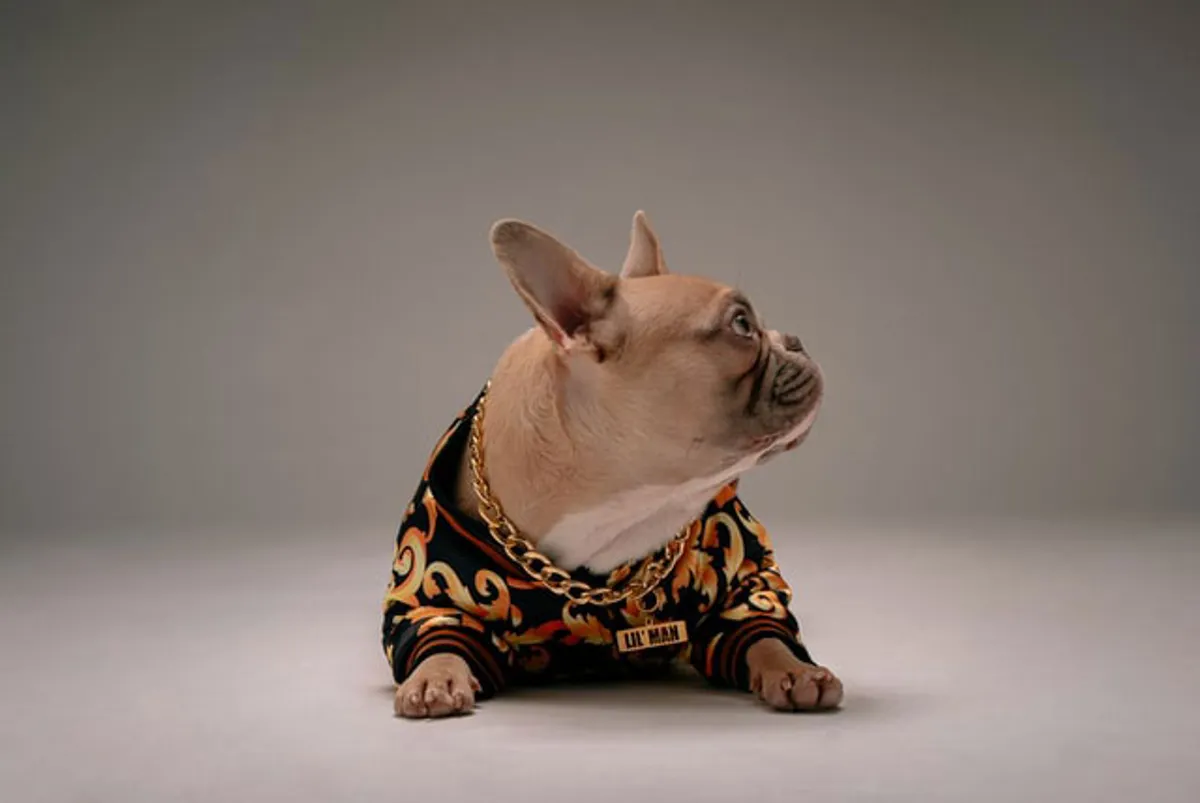
French Bulldog: Broader, more muscular and heavier for the height. Maximum weight 12.5 kg, typically 8 to 12 kg in practice. The head is rounder and larger, the body more compact and barrel-shaped. The French Bulldog sits lower to the ground.
Both have bat ears, though the Frenchie’s are set wider apart and more rounded at the tip. Seen together, the Boston looks athletic where the Frenchie looks stocky.
Temperament
Boston Terrier: Alert, lively and affectionate. Boston Terriers tend to be more energetic than Frenchies, often more eager to please and more responsive to training cues. They are friendly with strangers and enjoy interactive play. They can be more sensitive to harsh handling than French Bulldogs.
French Bulldog: Calmer, more laid-back and more stubborn. Frenchies are deeply companionable but are less inclined to perform for the pleasure of it. They assess whether a training request is worth their while more obviously than Boston Terriers. Both breeds attach strongly to their owners and are unsuited to being left alone for long periods.
For households wanting a slightly more active and responsive companion, the Boston Terrier suits that preference. For households wanting a calmer, heavier dog with less energy to manage, the Frenchie is the better fit.
Trainability
Boston Terriers are broadly considered easier to train. They tend to respond more readily to basic commands, show less of the selective compliance that Frenchie owners often encounter and are generally more motivated by praise alongside food rewards.
French Bulldogs can be trained to a high standard but require more patience and higher-value rewards. The stubborn streak is real rather than mythological: a Frenchie that has decided it is not interested in a training session is a difficult training partner. Short sessions with excellent food motivation and consistent positive reinforcement are the path through this.
Neither breed is a highly trainable working breed. Both are companion dogs whose training is about basic manners and safety, not performance.
Exercise requirements
Boston Terrier: Slightly higher exercise needs than a Frenchie, though still moderate compared to most other breeds. 30 to 45 minutes of walking per day is appropriate for an adult Boston Terrier in mild weather. They have somewhat better heat tolerance than French Bulldogs by virtue of being lighter and having slightly less severe BOAS on average, though they still require heat precautions.
French Bulldog: 20 to 40 minutes per day in mild weather. The exercise guide covers the heat restrictions and age-appropriate activity in detail. French Bulldogs are less suitable as running or hiking companions than Boston Terriers.
Both breeds are well-suited to flat or small-home living. Neither requires a garden, though both benefit from one.
Health
Both breeds are brachycephalic. The health risks that come with a flat face, primarily BOAS, heat sensitivity and eye conditions, apply to both.
Where the French Bulldog has greater risk
BOAS severity. French Bulldogs have more severe BOAS on average, reflecting the more extreme compression of the skull and airway. The proportion requiring surgical intervention is higher.
Spinal problems. French Bulldogs are significantly more prone to IVDD (intervertebral disc disease) and hemivertebrae than Boston Terriers. Spinal health monitoring and appropriate exercise restrictions are standard Frenchie ownership requirements.
Skin folds. French Bulldogs require more fold management than Boston Terriers, whose skin is less folded.
Birthing. Both breeds commonly require caesarean sections, but the rate is higher in French Bulldogs.
Where Boston Terriers have specific risks
Hereditary cataracts. Boston Terriers have a well-documented predisposition to hereditary cataracts, which can cause vision problems from early adulthood. DNA testing is available; reputable breeders test their breeding dogs.
Deafness in white-marked dogs. Boston Terriers with a high degree of white colouration (particularly those with white covering the skull) are at higher risk of hereditary deafness due to the genetic relationship between white pigmentation and cochlear development.
Patellar luxation. Common in Boston Terriers, as in many small breeds.
The practical difference
Both breeds have above-average veterinary costs and benefit significantly from lifetime pet insurance. French Bulldogs generate higher average claims, which is reflected in higher insurance premiums. Boston Terriers are somewhat cheaper to insure and to maintain medically over a lifetime, though they are not a low-cost breed.
Grooming
The Boston Terrier’s short, smooth, single-layer coat requires minimal grooming: a weekly brush and occasional bath. There are few skin folds to manage.
The French Bulldog’s grooming requirements are more involved: facial fold cleaning, nasal fold cleaning, ear cleaning and tail fold management are all regular tasks. For a breed prone to fold infections, missing routine cleaning has real consequences.
If minimal grooming effort is a factor, the Boston Terrier has a meaningful advantage.
Cost
| French Bulldog | Boston Terrier | |
|---|---|---|
| Purchase price | £2,500 to £3,500 | £1,500 to £2,500 |
| Monthly insurance | £60 to £100+ | £40 to £70 |
| Lifetime running costs | Higher | Moderate-high |
The French Bulldog is the more expensive dog to purchase, insure and maintain. For budget-conscious buyers, the Boston Terrier represents a meaningful saving without sacrificing the compact companion dog profile.
Which suits you
Choose the French Bulldog if: You want a calmer, heavier-set companion, you do not need a responsive training partner, you are prepared for more demanding fold care, and you have budgeted for higher insurance and potential veterinary costs.
Choose the Boston Terrier if: You want a slightly more active and trainable companion with lower grooming demands, lower insurance costs and broadly similar personality in a lighter body.
Both are excellent companion dogs. The choice depends on temperament preference, budget and how much daily grooming you are willing to do. For direct comparisons with the Frenchie’s closer relative, French Bulldog vs Pug and French Bulldog vs English Bulldog cover those pairings. The full French Bulldog temperament guide covers what daily life with the breed actually looks like.
Frequently asked questions
-
Both breeds are generally good with children and have friendly, sociable temperaments. The Boston Terrier tends to be slightly more energetic and may suit older children who can keep up with a more active companion. French Bulldogs are calmer and more tolerant, which often makes them a better fit in households with toddlers or very young children. Individual temperament varies significantly in both breeds; socialisation and training matter as much as breed tendency.
-
Boston Terriers are generally considered easier to train. They are more eager to please and slightly more responsive to basic obedience training than French Bulldogs, which tend to weigh up whether compliance is worth their while. Both breeds respond best to positive reinforcement with food rewards. The difference is one of degree rather than kind: both are trainable, but Boston Terriers tend to require less repetition and fewer motivational adjustments.
-
Both are brachycephalic breeds and share several health risks: BOAS, eye conditions and sensitivity to heat. The French Bulldog tends to have more severe BOAS on average and higher rates of IVDD, spinal problems and skin fold issues. Boston Terriers also have breed-specific concerns including hereditary cataracts and deafness in parti-coloured (non-tuxedo patterned) dogs. Neither breed is low-maintenance from a health perspective, but the French Bulldog generally generates higher average veterinary costs over a lifetime.
-
French Bulldogs are consistently more expensive to purchase and to own. A KC-registered French Bulldog typically costs £2,500 to £3,500; a Boston Terrier from a reputable breeder typically costs £1,500 to £2,500. Insurance premiums are higher for French Bulldogs, and the breed generates more expensive veterinary claims on average. Both breeds are above average in lifetime ownership cost, but the French Bulldog sits noticeably higher.
-
They are similar in height but differ in build. A standard French Bulldog weighs up to 12.5 kg; Boston Terriers are divided into weight classes (under 6.8 kg, 6.8 to 9 kg, and 9 to 11.4 kg). A small Boston Terrier is considerably lighter than a typical French Bulldog. The French Bulldog is noticeably broader, more muscular and heavier-set. The Boston Terrier is leaner, with a more athletic build.