Contents
How to clean French Bulldog ears at home: how often, which products work and the signs that excess wax has become an infection needing a vet visit.
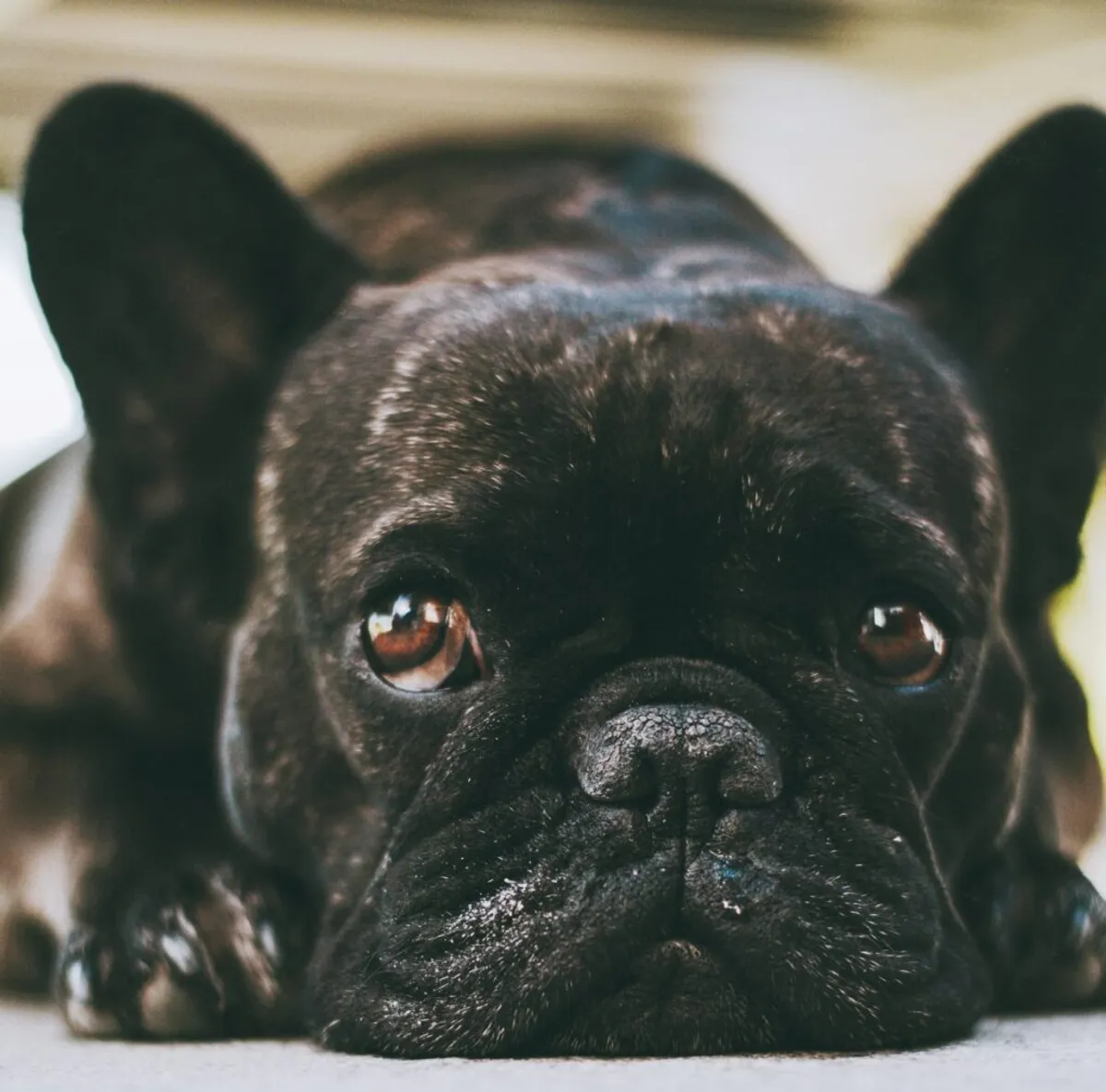
French Bulldogs have large, upright bat ears that catch more debris and harbour more moisture than the hanging ears of other breeds. This anatomy, combined with the breed’s high prevalence of allergic skin disease, makes ear problems common. Routine cleaning at home, done correctly, prevents the majority of ear infections before they establish.
The key point most owners miss: cleaning is about prevention, not treatment. Once an infection is established, home cleaning is not enough, that requires a vet.
How often to clean
A French Bulldog with healthy ears and no history of infections needs cleaning approximately once every two to three weeks. This removes the wax and debris that accumulates and allows you to monitor the ear regularly.
Dogs with a history of ear infections, or with confirmed allergic skin disease (atopic dermatitis), often benefit from weekly cleaning. The allergy component drives excess wax production and creates a more hospitable environment for yeast and bacteria; frequent cleaning reduces the microbial load.
Do not clean more than necessary. Over-cleaning can irritate the ear canal lining and remove the natural protective wax layer, which can increase infection risk.
How to clean the ears
What you need: A veterinary-formulated ear cleaner from your vet or a reputable pet supplier. Do not clean with water, olive oil or human ear drops; only use a product specifically designed for canine ears.
The method:
- Fold the ear flap back to expose the canal entrance.
- Apply the cleaner into the ear canal, enough to fill it without overflowing excessively.
- Massage the base of the ear firmly for 20 to 30 seconds. You will hear a squelching sound as the cleaner works through the canal.
- Allow your dog to shake their head, this moves loosened debris toward the outer canal.
- Use a soft cotton pad or gauze to wipe the outer canal and the inside of the ear flap, removing debris that has worked its way out.
- Do not use cotton buds inside the canal; they push debris deeper rather than removing it.
Finish with a dry wipe to remove excess moisture. The canal should look visually clean and have no significant odour when you have finished.
Choosing a cleaner
Routine maintenance, healthy ears: A standard ceruminolytic (wax-dissolving) ear cleaner is appropriate. Products such as Epi-Otic or equivalent veterinary cleaners are widely available.
Dogs prone to yeast infections: A cleaner with a mild antifungal component or a lower pH is useful. Yeast (Malassezia) thrives in neutral-to-alkaline environments; lower-pH cleaners are less hospitable.
Dogs prone to bacterial infections: Some cleaners contain mild antiseptic components. Vet guidance is appropriate for a dog with a history of infections, as the choice of cleaner is worth tailoring to the specific bacterial or yeast population causing the problem.
Avoid products containing alcohol or those formulated for human use. Dog ears have a longer, more angled canal than human ears; products designed for human anatomy are not appropriate.
Signs of a healthy ear
After cleaning, a healthy Frenchie ear:
- Has minimal residual wax (light tan coloured at most)
- Has no significant odour
- Looks pink and clean, not red or inflamed
- Produces no discharge when cleaned
The dog should not react to having their ears handled beyond mild discomfort from the procedure itself.
Signs of an infection, see the vet
Do not attempt to treat an ear infection at home with over-the-counter products. These are often ineffective and can worsen the condition by masking clinical signs while infection continues.
Contact your vet promptly if you observe:
- Dark brown, grey or black wax that is significantly more than usual
- A yeasty, sour or foul smell from the ear
- Redness or swelling visible at the canal entrance
- Repeated head shaking, ear scratching or face-rubbing
- Pain or discomfort when the ear is touched
- Yellow, green or bloody discharge
Ear infections in French Bulldogs are closely linked to allergic skin disease. A dog with three or more ear infections per year almost certainly has an underlying allergy that is not being managed; treating each infection without addressing the root cause produces an ongoing cycle. This is covered fully in the ear infections guide.
Building the routine
Introducing ear cleaning gradually, with calm handling and food rewards, makes the process easier. Dogs that have had their ears examined from puppyhood accept the handling with minimal resistance. Dogs that have only had ears touched when they are infected associate handling with discomfort and become resistant over time.
Ear cleaning fits naturally into the broader grooming routine. The full routine, including fold cleaning, coat brushing and nail checks, is in the grooming guide. The fold cleaning approach that parallels ear cleaning in its emphasis on frequency and drying technique is in the fold cleaning guide.
Frequently asked questions
-
A French Bulldog with healthy ears and no history of infections needs cleaning approximately once every two to three weeks. Dogs with a history of ear infections, or with confirmed atopic dermatitis, often benefit from weekly cleaning. Do not clean more than necessary: over-cleaning irritates the ear canal lining and can paradoxically increase infection risk.
-
Use a veterinary-formulated ear cleaner available from your vet or a reputable pet supplier. Avoid cleaning with water, olive oil or human ear drops; these are not suitable for the canine ear canal. Ceruminolytic ear cleaners dissolve wax effectively; for dogs prone to yeast infections, a lower-pH cleaner or one with a mild antifungal component is preferable.
-
No. Cotton buds (cotton swabs) push debris deeper into the canal rather than removing it. Use a soft cotton pad or gauze to wipe the outer canal and ear flap after the cleaner has been massaged in and the dog has shaken. Never insert anything into the ear canal itself.
-
Signs of an ear infection include: dark brown, grey or black wax in greater quantity than usual; a yeasty, sour or foul smell; redness or swelling visible at the canal entrance; the dog shaking their head, scratching the ear, or rubbing the side of their face on surfaces repeatedly; and pain or sensitivity when the ear is touched. Any of these signs warrant a vet assessment.
-
Recurrent ear infections almost always have an underlying cause. In French Bulldogs, the most common driver is allergic skin disease (atopic dermatitis), which creates excess wax and an environment where bacteria and yeast thrive. A dog with three or more ear infections per year likely has unmanaged allergy as the root cause; treating each infection without addressing the allergy produces an ongoing cycle.