Contents
A French Bulldog’s nose is naturally variable. It can be damp and cool one hour and slightly drier the next, particularly after a nap or on a warm day. Most French Bulldog owners encounter the dry nose question sooner or later, usually after noticing their dog’s nose looking more cracked or crusty than usual and wondering whether something is wrong.
The honest answer is that dry nose in Frenchies is common and is usually benign, but there are versions of it that warrant veterinary attention. Knowing the difference saves both worry and unnecessary vet trips.
What a normal French Bulldog nose looks like
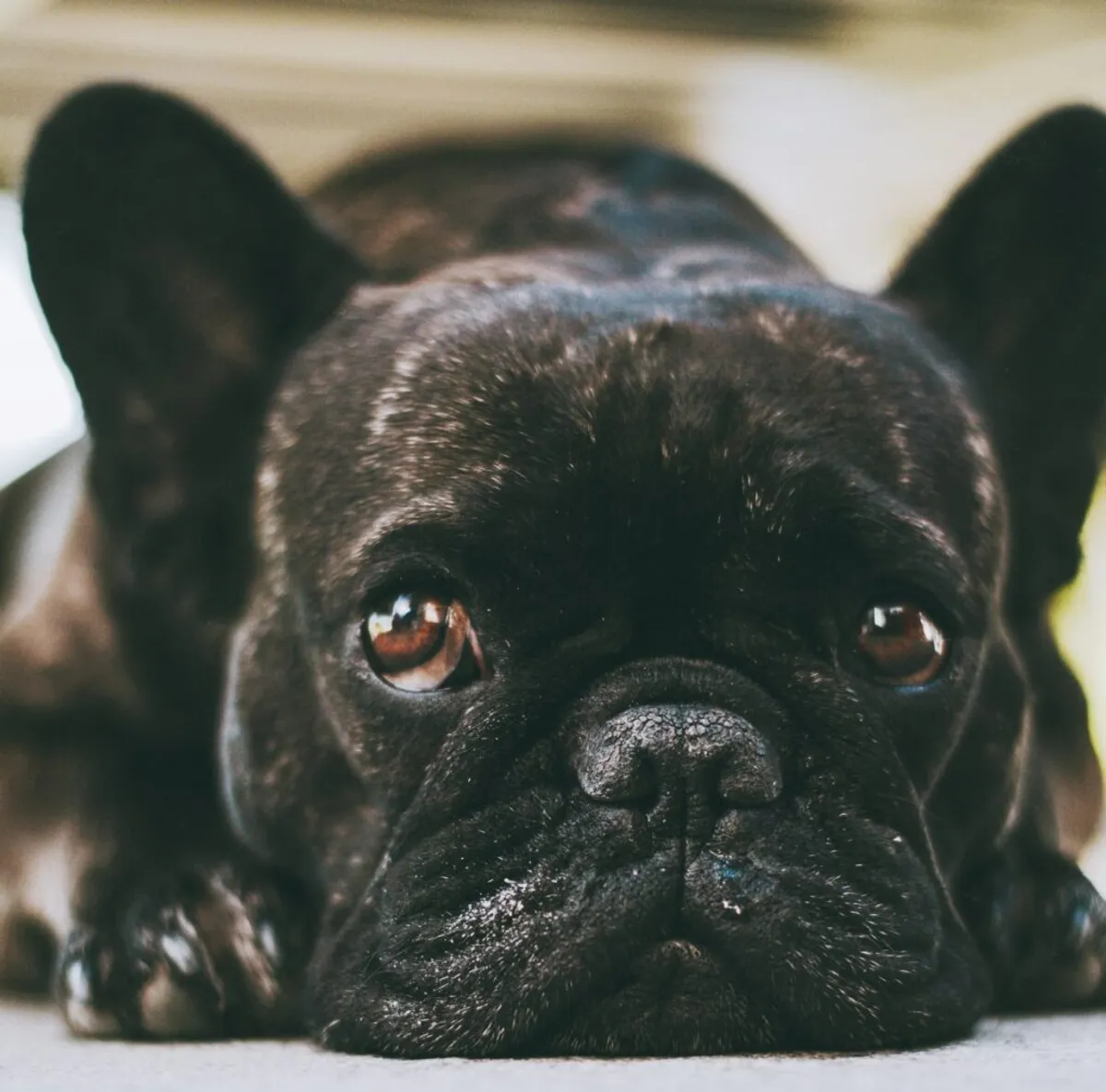
A healthy Frenchie nose is smooth, uniformly pigmented and varies naturally between slightly moist and slightly dry throughout the day. It should not have significant cracking, thick crusts or areas of colour change. A small amount of clear, watery nasal discharge is normal, particularly after exercise or excitement.
French Bulldogs, like all brachycephalic breeds, have altered nasal anatomy compared to longer-nosed dogs. The shortened nasal passages affect airflow, which can make the nose slightly more prone to dryness and minor crusting than in non-brachycephalic breeds. This is part of the Frenchie baseline.
Common causes of dry nose
Sleep and rest position
Many French Bulldogs wake up with a noticeably drier nose than normal. This is usually because they sleep with their nose pressed against a surface, which reduces the normal circulation of air over the nose. The nose typically self-corrects within 30 minutes of the dog being up and about. This is normal and requires no treatment.
Low environmental humidity
Central heating in UK homes significantly reduces air humidity, particularly in winter. A drier indoor environment means the nose loses moisture more quickly. If your Frenchie’s nose is consistently drier in winter or when the heating is on, this is likely the cause. A room humidifier (placed where the dog spends most time) can help, along with regular nose balm application.
Dehydration
A slightly dry nose combined with other mild signs of dehydration (slightly sticky gums, reduced skin turgor) can indicate the dog is not drinking enough. Fresh water should be available at all times, and some dogs prefer moving water (a pet fountain can encourage drinking). If you suspect significant dehydration, particularly alongside vomiting or diarrhoea, see a vet promptly.
Sunburn
Pale-nosed French Bulldogs, particularly those with pink or unpigmented areas on the nose leather, are susceptible to UV damage. A sunburned nose may appear redder, more sensitive and drier than usual. Pale-nosed dogs spending extended time outdoors in summer benefit from a pet-safe sunscreen on the nose and ears.
Nasal hyperkeratosis
Nasal hyperkeratosis is the accumulation of excess keratin in the nose skin, causing it to thicken and develop a rough, cracked or cobbled texture. It ranges from mild (the nose just looks drier and slightly rougher than normal) to severe (thick crusts that crack and bleed).
Nasal hyperkeratosis is more common in brachycephalic breeds and in older dogs. Mild cases are managed with regular moisturisation. Moderate to severe cases need veterinary assessment to:
- Confirm the diagnosis and rule out conditions that can mimic hyperkeratosis (including discoid lupus and zinc-responsive dermatosis)
- Assess whether the crusting needs to be gently softened and removed
- Determine whether prescription treatment is needed
BOAS-related
In dogs with moderate to significant BOAS, altered breathing patterns affect the moisture content of air moving over the nose. Dogs who predominantly mouth-breathe due to restricted nasal airways can develop a drier nose as a secondary effect. If your Frenchie’s dry nose comes with breathing difficulty, snoring at rest, or open-mouth breathing during normal activity, a BOAS assessment is worth prioritising. The BOAS guide covers the condition in detail.
Less common causes
Immune-mediated conditions including discoid lupus erythematosus (DLE) can affect the nose and surrounding skin, causing depigmentation, ulceration and a dry, scaly surface. Zinc-responsive dermatosis is rare in French Bulldogs but occurs in some dogs and responds to zinc supplementation. Both conditions require veterinary diagnosis and prescription management.
Managing a dry nose at home
Regular nose balm application
A pet-specific nose balm applied once or twice daily is the most effective home management for mild to moderate nasal dryness. Good nose balms contain food-safe, natural moisturising ingredients that are safe if licked, and sit in the nose tissue rather than just coating the surface.
See the best nose balms for French Bulldogs guide for specific product recommendations.
Gentle crust removal
In dogs with more significant dryness or early hyperkeratosis, gently softening and removing dry crusts before applying balm gives better results than simply applying balm on top of the build-up. Use a warm, damp cloth to soften the area for a minute or two, then very gently remove loose material. Do not force off firmly attached crusts. If the crust is thick, adhered or the dog finds the area sensitive, let your vet assess and demonstrate appropriate removal technique.
Environmental adjustment
A room humidifier in the areas where your dog spends most time can reduce nose dryness caused by central heating. Some owners find that simply moving the dog’s sleeping area away from heat sources helps.
Diet and hydration
Ensure fresh water is always available. If the dog is eating a predominantly dry kibble diet, adding water to meals or incorporating some wet food can help overall hydration. Some breeders and vets recommend omega-3 fatty acid supplementation for skin and coat health, which may also support nose skin condition, though evidence specifically for nasal hyperkeratosis is limited.
When to see a vet
Book a vet appointment if:
- The dry nose is accompanied by coloured, yellow, green or bloody discharge
- There is significant colour change or depigmentation in the nose leather
- The crusting is severe, adhered firmly or recurs quickly after removal
- The dog is frequently pawing at the nose or showing clear discomfort
- The dry nose accompanies other symptoms: lethargy, reduced appetite, skin changes elsewhere
- The nose does not improve with regular balm application over two to three weeks
For routine grooming guidance, including how to incorporate nose care into a regular grooming routine, see the grooming guide.
Frequently asked questions
-
It depends on context. A slightly dry nose after sleep, in dry weather or on a warm day is generally normal in French Bulldogs. The nose naturally varies between moist and drier throughout the day. A consistently dry, cracked, crusty or thickened nose, particularly one accompanied by discharge, loss of normal nose pigmentation or signs of discomfort, is not normal and warrants veterinary assessment.
-
Common causes include: sleeping with the nose pressed against a surface, low environmental humidity (particularly in centrally heated houses), mild dehydration, sunburn (especially in pale-nosed dogs), and nasal hyperkeratosis, a condition where the nose skin thickens and becomes cracked. Less common causes include immune-mediated conditions, discoid lupus, zinc-responsive dermatosis and, in severe or persistent cases, nasal digital hyperkeratosis.
-
Nasal hyperkeratosis is a condition where the skin of the nose produces excess keratin, causing it to thicken, harden and develop a crusty or cobbled texture. It can range from mild, where the surface just looks dry, to severe, where thick crusts form and crack. Mild cases are managed with regular moisturisation using a pet-safe nose balm. Severe cases need veterinary assessment to rule out underlying conditions and may require prescription treatment.
-
Vaseline is not recommended. It is a petroleum-based product that is not toxic in small amounts but can cause gastrointestinal upset if ingested regularly, which is likely as dogs frequently lick their noses. It also sits on the surface of the nose rather than moisturising the tissue, and can attract dirt. Use a pet-specific nose balm made from food-safe, natural ingredients instead.
-
For a dog with mild dryness, applying a nose balm once or twice a day, especially after walks and before sleep, is usually adequate. For a dog with more significant hyperkeratosis, more frequent application and gentle removal of crusting before applying balm gives better results. If the dryness is so persistent that balm alone is not managing it, a vet assessment is warranted.
-
See a vet if the dry nose is accompanied by: heavy crusting that does not respond to regular balm application; discharge from the nose (coloured, yellow, green or bloody); loss of normal nose pigmentation or colour change; the dog frequently pawing at the nose or showing signs of discomfort; or if the dry nose appears alongside other symptoms such as lethargy, reduced appetite or any skin changes elsewhere on the body.