Contents
The French Bulldog breed standard is the official written description of what an ideal French Bulldog should look and behave like. Published and maintained by the Kennel Club, it is the benchmark used by show judges, the reference point for breeders aiming to produce KC-registered dogs, and increasingly the subject of animal welfare debate about whether some of its characteristics are compatible with the health of the dogs it describes.
The Kennel Club breed standard: key points
The full KC standard runs to several pages. The characteristics most relevant to owners and buyers are summarised here.
General appearance
The standard describes the French Bulldog as a sturdy, compact, solid dog of small to medium build with a powerful muscular body. The dog should be active, intelligent and affectionate. Despite its apparent heaviness, it should move freely and with good reach. The overall impression should be of quality rather than excess.
Size
Maximum weight: 12.5 kg for both dogs and bitches. The standard does not specify a minimum weight. Dogs significantly below 8 kg are outside the standard and may have been produced through selective breeding of runts or other practices that can compromise health.
Head and skull
The head is a defining characteristic. The standard describes a large, square head with broad skull and flat forehead. The muzzle is broad, deep and laid back (pushed in relative to the skull). The nose is extremely short, broad and black (except in lighter-coloured dogs where the nose may be lighter).
This is the description at the centre of the welfare debate: the flat muzzle and specific skull proportions associated with the standard are directly linked to the BOAS risk that is one of the breed’s most significant health concerns. The standard has been updated over time to include wording that discourages excessive shortening of the muzzle, but the relationship between the standard’s preferred proportions and BOAS remains real.
Eyes
Round, moderate in size, dark in colour, set wide apart and low in the skull. The eye should not be sunken or show white when looking straight ahead. The standard specifically notes that eyes should be neither sunken nor prominent, two characteristics associated with different health risks.
Ears (the bat ear)
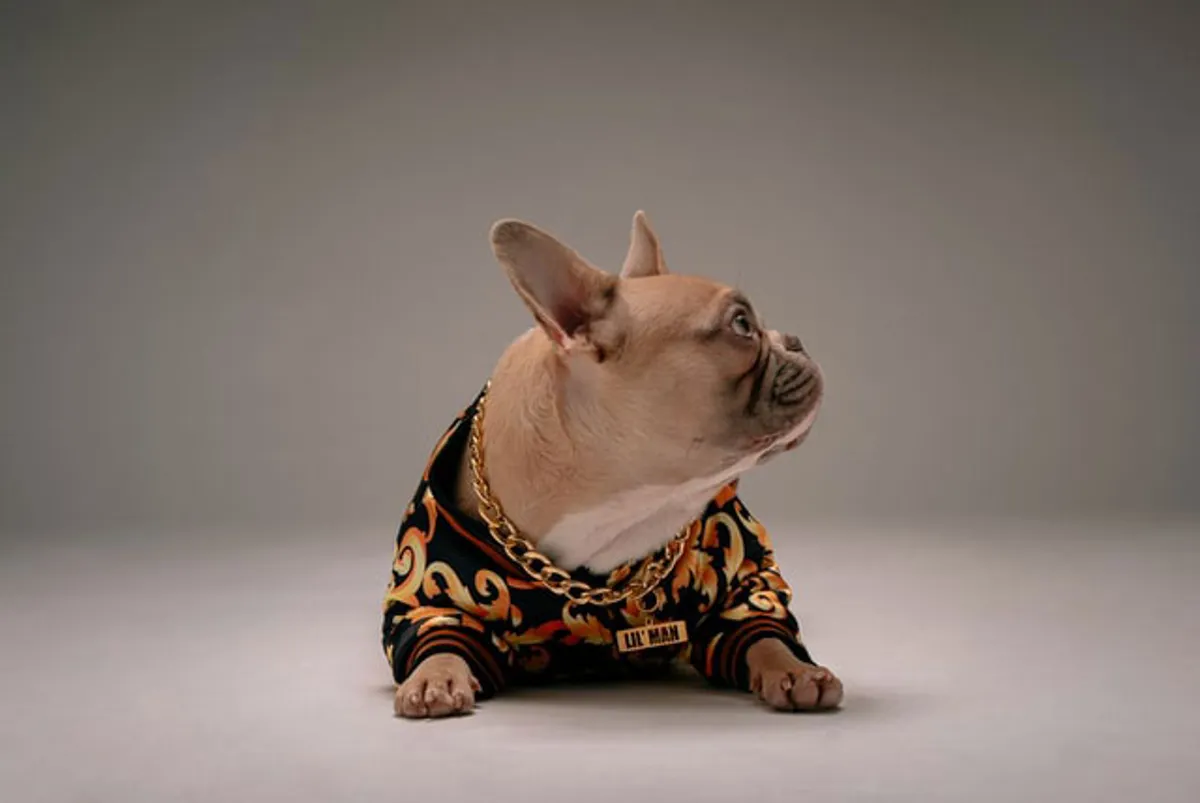
This is the French Bulldog’s most distinctive feature. The standard specifies bat ears: broad at the base, elongated, with a rounded top, set high on the head and wide apart, and carried erect. The inner surface should be visible from the front.
The bat ear distinguishes the French Bulldog from the English Bulldog (rose ear) and from terriers. It was the subject of heated disagreement between English and American breeders in the 1890s, with American enthusiasts successfully advocating for the bat ear standard that prevails today. The history is covered in the history of French Bulldogs guide.
Body
The body should be compact, rounded and well-ribbed. The back is broad and muscular. The loins are arched and the abdomen tucked up (not drooping). The chest is broad and the shoulders wide.
The standard also addresses the tail, which should be short, set low, thick at the root and tapering rapidly. Straight tails and screw tails are both acceptable. A screw tail that folds tightly against the body is associated with tail pocket issues; the standard’s acceptance of this tail type has been a welfare criticism.
Coat
Short, fine, smooth and close-lying. This is one area of the standard with minimal welfare implications, though it does mean Frenchies offer limited insulation and should not be left outdoors in cold conditions.
Recognised colours
The KC recognises specific colours as breed-standard. These include brindle, fawn, cream, pied (white with brindle or fawn patches), and combinations of these. Merle, lilac, chocolate, isabella and the range of colours marketed as exotic or rare are not KC-recognised colours and dogs in these colours are not eligible for KC breed registration.
Temperament
The standard describes the French Bulldog as vivacious, affectionate, amenable and playful. The dog should be active and alert. Aggression is not a breed characteristic and would be considered a fault.
The health debate around the standard
The breed standard and French Bulldog health are in genuine tension, and this is widely acknowledged by vets, welfare organisations and a significant portion of the breeding community.
The Kennel Club has made modifications over time. The 2009 standard revision added the requirement that judges should fault dogs showing obvious respiratory distress. More recent guidance has emphasised that dogs that cannot breathe normally are not acceptable. The BVA’s position is that the current KC standard still favours conformational characteristics, particularly around the skull and muzzle, that are structurally incompatible with healthy breathing in a significant proportion of dogs.
The practical outcome for buyers is that purchasing a KC-registered French Bulldog from a breeder who health-tests does not guarantee a healthy dog, but it is a better starting point than purchasing from a breeder who does not health-test and does not engage with the KC. The KC’s Assured Breeder Scheme requires member breeders to meet minimum health testing requirements.
What the breed standard means for buyers
Understanding the breed standard helps buyers evaluate breeders more effectively.
A responsible breeder knows the standard, breeds toward it and can explain how their dogs conform to it. They understand that the standard includes the health requirements and will be able to provide health test results for BOAS assessments, eye screening, and other relevant checks.
A breeder selling dogs in unrecognised colours as premium products, a breeder producing “micro” or “mini” Frenchies outside the standard weight range, or a breeder who cannot produce KC registration papers is not breeding to the standard and should not be presenting their dogs as KC-standard French Bulldogs.
For buyers, the breed standard also helps contextualise what “a good example of the breed” actually means for health. A French Bulldog with a longer muzzle, wider nostrils and fewer extreme proportions than the ideal described in the standard may look less like a show dog but breathe more easily and require less veterinary intervention. The balance between conformation and health is one that buyers can influence through the choices they make.
How the French Bulldog compares in these characteristics to the closely related English Bulldog is in the French Bulldog vs English Bulldog guide. For a broader fact file on the breed, origins, size, temperament and the health realities that contextualise what the standard asks for, the French Bulldog facts guide covers the key characteristics in one place. For the coat traits that fall outside the breed standard, particularly the long coat (fluffy) trait that has become commercially popular, the fluffy French Bulldog guide explains the genetics, the KC position and the welfare debate around breeding for the trait.
Frequently asked questions
-
The Kennel Club breed standard is a written description of the ideal physical and temperamental characteristics of the French Bulldog. It covers general appearance, size (maximum 12.5 kg), head and skull shape, eyes, ears (bat ears, broad, rounded, erect), body (compact, muscular), coat, colour and temperament. The standard forms the basis on which judges assess French Bulldogs at dog shows. KC registered breeders are expected to breed toward the standard, though compliance is not formally verified outside the show ring.
-
This is a significant and ongoing debate within veterinary and animal welfare circles. Critics of the current standard argue that characteristics it specifies or implies, the flat face, specific skull proportions, screw tail and compact body, are directly associated with BOAS, spinal conditions, birthing difficulties and other health issues. The Kennel Club has acknowledged these concerns and has made amendments to the standard over time to discourage extreme features. The BVA, RSPCA and many vets argue that further changes are needed. The standard itself is not static, and the Kennel Club has committed to ongoing review.
-
The KC standard specifies a maximum weight of 12.5 kg for both dogs and bitches. There is no minimum weight stated. A standard Frenchie weighing 8 to 12 kg and standing around 30 cm at the shoulder is within breed standard parameters. So-called 'mini', 'micro' or 'teacup' French Bulldogs that weigh significantly less than 8 kg are outside the breed standard and are often produced through breeding runts or through genetic manipulation that introduces its own health risks.
-
The KC standard specifies 'bat ears', broad at the base, elongated, with a rounded top, set wide apart, carried erect. The bat ear is one of the French Bulldog's most distinctive features and was the subject of transatlantic debate in the late nineteenth century. Ears that fold, droop or are rose-shaped (like the English Bulldog) do not conform to the French Bulldog standard. The bat ear is the definitive distinguishing characteristic that separates the French Bulldog type from related breeds.
-
No. Colours and types marketed as 'exotic', 'rare' or 'designer', including fluffy, merle, lilac, isabella, chocolate and platinum, are not recognised by the Kennel Club and dogs in these colours are not eligible for KC breed registration as French Bulldogs. The KC recognises a specific list of breed colours. Breeders selling dogs in unrecognised colours at premium prices based on rarity are not producing KC-standard dogs, regardless of any other registration or paperwork they provide.